• We'd like to take this opportunity to wish you a Happy Holidays and a very Merry Christmas from all at Golf Monthly. Thank you for sharing your 2025 with us!

Change to US style slope system from current CSS

I think our course is slope rated for American visitors.

Although length is a consideration it is not the only factor in setting a SSS. Many course that are not that long have quite a high SSS depending on factors such as the size of the greens, the length the semi is cut to etc.

The US system is complicated. In the late 90s I had a US handicap index, you had to multiply your index by the slope for the course/tees used to get your playing handicap. I have no memory if there is any account of how difficult the weather is as I only played in society comps.

No weather factors in the USGA version but the Australians have modified it to include one...what the unified system does us anyone's guess!

In practice I accept the argument that for the vast majority of golfers it doesn't need one because of the handicap calculation. Extremes of poor conditions will result in scores that will simply be discarded and never enter the average calculation, and when everything's onside the result is diluted by the averaging.
Add the inclusion of all rounds and the extremes.are even less relevant in themselves and as the system is designed to reflect form (rather than class - or underlying capability) people's handicaps will move in tandem with others through the changing conditions.
 
My worry is that if a CSS style system is discarded a lot of players who are entered into a medal will just not play if there is any adverse weather.

Currently you can play and know that if it is pretty tough to score a rise in CSS will protect your hcp. I can see a lot of players avoiding comps if the scoring conditions are not optimum.
 
if you play at the same course all the time, and the majority of your fellow players at this course do the same then there's no issue.
however, my course has CSS of 72, versus Hotchin at Woodhall has 73 I think - to suggest there is only1 shot difference between the 2 tracks is simply wrong.
The Hotchin is a minimum of 5 shots harder.
 
if you play at the same course all the time, and the majority of your fellow players at this course do the same then there's no issue.
however, my course has CSS of 72, versus Hotchin at Woodhall has 73 I think - to suggest there is only1 shot difference between the 2 tracks is simply wrong.
The Hotchin is a minimum of 5 shots harder.

The difference is 3 - the Hotchkin SSS is 75.
 
My worry is that if a CSS style system is discarded a lot of players who are entered into a medal will just not play if there is any adverse weather.

Currently you can play and know that if it is pretty tough to score a rise in CSS will protect your hcp. I can see a lot of players avoiding comps if the scoring conditions are not optimum.

All this will be irrelevant - every round played will count for handicap.
 
Having had the luxury of being over here for 18 months now I can clearly see how antiquated the SSS system is. The main benefit to me how people can play from different tee boxes, yet still be able to play against each other. There are 3 sets of tees that all have their own rating. This is how an average 14 handicap changes between each tee box where I normally play at, it's a par 72 course.

Gold: 69.2/121 gets 15 shots
White: 71.8/129 gets 16 shots
Blue: 75.4/140 gets 17 shots

To me this system gives everyone a level playing field. If you get your handicap from the back tees then it will get knocked down when you play from the front ones, as my example shows. It would hardly be fair if that 17 handicapper played off the front tees and still got his 17 shots.
 
Having had the luxury of being over here for 18 months now I can clearly see how antiquated the SSS system is. The main benefit to me how people can play from different tee boxes, yet still be able to play against each other. There are 3 sets of tees that all have their own rating. This is how an average 14 handicap changes between each tee box where I normally play at, it's a par 72 course.

Gold: 69.2/121 gets 15 shots
White: 71.8/129 gets 16 shots
Blue: 75.4/140 gets 17 shots

To me this system gives everyone a level playing field. If you get your handicap from the back tees then it will get knocked down when you play from the front ones, as my example shows. It would hardly be fair if that 17 handicapper played off the front tees and still got his 17 shots.

This is makes a lot of sense, and surely isn't that difficult to implement at a course?

Also, like the idea of Duncan's point where every round counts. Lots of people join courses and play there for different reasons, and it's a nice way of being able to maintain a handicap for yourself, without having to commit to playing competitions.
 
New SSS has been established on USGA rating system for some time now, as Foxy puts it the CONGU course rating had a greater focus on length than the USGA one, or as many highlight, it's really ore a case of the USGA system taking more account of other relevant factors.

Importantly a course rating under the USGA system includes a bogey index based on the nominal capabilities of a 20 handicapper as well as the standard scratch rating. This is then used in a course matrix to derive playing handicaps etc

From a purely personal opinion I would be amazed if more than 20% of courses end up with a revised rating that has any practical impact; and I wouldn't be surprised if it was less than 10%.

Put another way, it's not going to be the rating element that is going to make any noticable difference to people - it's the implementation (what and how) of a new handicapping system. Scheduled 2020 but I agree with Phil that 2022-2025 has to be more likely.

Ive seen 3 courses re-assed in N Devon and the SSS has remained the same on all tees. As to taking wind in to account the assessers said that wind factors are only taken into account on links courses. Our course is nearly as high as the highest point on Exmoor and they were of the opinion that wind was not a factor :lol:.

If other counties are relying on the same amount of volunteers as ours 2025 for the completion of this exercise might be a tad optimistic. :(
 
I'm sorry I'm not totaly up to speed on this at all and so asking as it's the best way to learn. Is this going to be optional or mandatory to be measured and have a slope rating and if so, will its implementation also then become compulsory. Duncan Mackie's post has confused me about on 20% having the a revised ranking and if it has a scheduled implementation date what happens to those without this other than the date clearly shifts. Will they have to fall into line eventually and will CONGU give them a final deadline. What happens after that
 
I'm sorry I'm not totaly up to speed on this at all and so asking as it's the best way to learn. Is this going to be optional or mandatory to be measured and have a slope rating and if so, will its implementation also then become compulsory. Duncan Mackie's post has confused me about on 20% having the a revised ranking and if it has a scheduled implementation date what happens to those without this other than the date clearly shifts. Will they have to fall into line eventually and will CONGU give them a final deadline. What happens after that
All courses are scheduled to be done in England, and I believe the rest of UK.
 
Interested to know how the "every round counts" concept works in practice? Do players have to register like for a supplementary at present? What if they play great for 16 holes then walk off as it's slow and have to go home etc? Sure there are a lot of positives as any statistical based system will be more accurate with more data but doesn't it also mean less control for committees and more openness to manipulation (in both directions)?
 
Interested to know how the "every round counts" concept works in practice? Do players have to register like for a supplementary at present? What if they play great for 16 holes then walk off as it's slow and have to go home etc? Sure there are a lot of positives as any statistical based system will be more accurate with more data but doesn't it also mean less control for committees and more openness to manipulation (in both directions)?
Both CONGU and USGA handicap systems have good and bad points. Personally I like to play friendly rounds when I don't have to worry about my handicap (CONGU), but on the other hand many players don't play in enough qualifying competitions to give enough data for a statistically significant handicap. 3 a year is not enough! USGA is good in that it gathers more data and makes allowances for the effects of course difficulty on higher handicap players (slope). On the other hand it is more complex and easier to cheat to manipulate handicaps.
 
Both CONGU and USGA handicap systems have good and bad points. Personally I like to play friendly rounds when I don't have to worry about my handicap (CONGU), but on the other hand many players don't play in enough qualifying competitions to give enough data for a statistically significant handicap. 3 a year is not enough! USGA is good in that it gathers more data and makes allowances for the effects of course difficulty on higher handicap players (slope). On the other hand it is more complex and easier to cheat to manipulate handicaps.
I can honestly say that most of our club members play between 10-20 Qs in a year, it's a shame you don't get that kind of response at your club.

Not great that you feel that you have members who would cheat and manipulate a handicap system.
 
Both CONGU and USGA handicap systems have good and bad points. Personally I like to play friendly rounds when I don't have to worry about my handicap (CONGU), but on the other hand many players don't play in enough qualifying competitions to give enough data for a statistically significant handicap. 3 a year is not enough! USGA is good in that it gathers more data and makes allowances for the effects of course difficulty on higher handicap players (slope). On the other hand it is more complex and easier to cheat to manipulate handicaps.


Both have their merits yes and both will have those who cheat the system.
Once used to it i found the NZ version very easy to use.
In theory you are supposed to enter a card every time you play. in inter club match play matches we had to submit a card, if we finished early we marked the rest of the card as if we played to par for our handicaps .
As it's based on the best 10 of your last 20 ( All online so easy to check) there can be some pressure when you know you're about to lose a "good card"
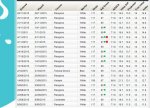
Below is a link to a 14 handicappers golf over the last 3 months under the NZ version of the USGA handicap system. You can see now to due his lack of form he has increased from 12 to 14.

Screenshot003.jpg
 
Both CONGU and USGA handicap systems have good and bad points. Personally I like to play friendly rounds when I don't have to worry about my handicap (CONGU), but on the other hand many players don't play in enough qualifying competitions to give enough data for a statistically significant handicap. 3 a year is not enough! USGA is good in that it gathers more data and makes allowances for the effects of course difficulty on higher handicap players (slope). On the other hand it is more complex and easier to cheat to manipulate handicaps.

Actually it is difficult to manipulate your handicap up. You are going to have to submit another 20 cards that are higher than your current handicap to remove the good ones that are being used to calculate your current one.

Also I have been told that there is something within the software to pick up on someone who is obviously trying to manipulate their handicap up.
 
Actually it is difficult to manipulate your handicap up. You are going to have to submit another 20 cards that are higher than your current handicap to remove the good ones that are being used to calculate your current one.

Also I have been told that there is something within the software to pick up on someone who is obviously trying to manipulate their handicap up.
Actually the USGA system is based on a rolling average of the best 10 out of your last 20 scores. So it should be quite easy to manipulate a handicap upwards. Also if players want to reduce their handicaps, they will only play on days with the most benign conditions, because there is no equivalent of CSS to adjust for the conditions.
 
Top