D
Deleted member 18588
Guest
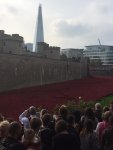
Two weeks ago we visited Tyne Cot Cemetery at Passchendaele where there were an estimated 860,000 German and UK and Commonwealth casualties (killed, injured and missing). And although this ToL installation may to some feel a bit 'superficial', 'obvious' or inward looking - it is very poignant for me in that with there being 880,000 poppies that's - for me - one poppy for each casualty from that one battlefield - and that makes that vast carpet of poppies awesome in the most moving way,
On a personal basis I have tried to instill an understanding of the Great War in my children by making it personal to them. So whilst they were taught about it at school - and my daughter went a school trip to Ypres - they have used in their projects the photo we have of my grandfather in uniform and mounted on his horse in France in 1914 and talked to them of where he served and what happened to him (he was in the Scottish Horse - the mounted regiment of the Black Watch). They've also read the letter a mate sent to him from the trenches towards the end of the war - my grandfather was recuperating in hospital back in Perthshire (having been gassed). We also took them to the French National War Memorial at Verdun - and that has certainly stuck in the minds.
Hopefully through that we have managed to pass on the understanding of what happened back then - and that has been happening since that war that didn't end all wars.
Very similar story, we visited Ypres and Tyne Cot 16 years ago with our two sons the elder of whom was, at that time nearly 16 so only weeks or months younger than some whose deaths were remembered there. When they realised that it certainly brought it home to them.
Two hulking great sports mad teenagers suddenly deep in thought and later full of questions. Now the younger one is, as I said, a teacher trying to explain the futility of all such conflicts to 10 & 11 year olds and sometimes being amazed by the perceptiveness of their questions.
Most pertinently to us as a family was being able to visit the grave at Etaples of my great-uncle with my mother, then aged 80, thus enabling her to fulfill a promise she made to her grandmother in the late 1920's as "Grannie Shaw" a poor working-class Brummie was never likely to be able to see her son's grave.
Memories live on and hopefully parents and grandparents will continue to impress upon the young that war is not some game played on a computer but that it has a devastating effect upon the lives of all.