
150 Yards Out

I think good course management is important but the key to scoring well on any golf hole varies every time you play it.
Some holes require accuracy, some don't. If you need to guarantee hitting the fairway on a tight hole, take something that guarantees that - for some it will still be driver, for some it will be an iron.

I think playing every hole to leave yourself 150 for your 2nd shot, would suggest you are going to struggle to break 80. But if your aim is to break 90 or 100, then it's probably not a bad suggestion.

Personally, I am more of a thinking man's golfer (i.e. use course management), than a grip it and rip it type player

Personal example of how I play:
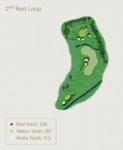
I remember playing in a 4 ball at Farleigh golf course. We were on the Red loop 2nd, playing off the yellows (287 yard par 4).

Player 1 (competitor) - driver off the tee, pushes it into the trees, lost ball. Hits a second shot and same result.
Player 2 (competitor) - driver off the tee, duffs it in the rough on the left. Takes 2 to get out, 2 more to get on the green and 3 putts (high handicapper)
Player 3 (playing partner) - driver off the tee. Hits it into one of the bunkers in front of the green.
Me - took an iron off the tee. Middle of the fairway.

All three of them laughed a bit and player 1 said 'that's the most conservative tee shot I've ever seen'.

My second shot - hit the green pin high, 8 feet from the hole.
Playing partner - gets out of the bunker but leaves himself a big putt for birdie. He then leaves his birdie putt 7 feet short. He holed it for par.

Me - disappointing as I didn't sink the birdie putt as it narrowly missed on the high side but I was by far the closest to walking off with a birdie and had the easiest of tap-ins for par.

But if I was playing that course again - I can't say I would hit the same club off the tee. It might not call for it. I might be striping my driver so might go for it in off the tee
 

Attachments

  • red loop 2.jpg
    red loop 2.jpg
    38.4 KB · Views: 40
I think good course management is important but the key to scoring well on any golf hole varies every time you play it.
Some holes require accuracy, some don't. If you need to guarantee hitting the fairway on a tight hole, take something that guarantees that - for some it will still be driver, for some it will be an iron.

I think playing every hole to leave yourself 150 for your 2nd shot, would suggest you are going to struggle to break 80. But if your aim is to break 90 or 100, then it's probably not a bad suggestion.

Personally, I am more of a thinking man's golfer (i.e. use course management), than a grip it and rip it type player

Personal example of how I play:
I remember playing in a 4 ball at Farleigh golf course. We were on the Red loop 2nd, playing off the yellows (287 yard par 4).

Player 1 (competitor) - driver off the tee, pushes it into the trees, lost ball. Hits a second shot and same result.
Player 2 (competitor) - driver off the tee, duffs it in the rough on the left. Takes 2 to get out, 2 more to get on the green and 3 putts (high handicapper)
Player 3 (playing partner) - driver off the tee. Hits it into one of the bunkers in front of the green.
Me - took an iron off the tee. Middle of the fairway.

All three of them laughed a bit and player 1 said 'that's the most conservative tee shot I've ever seen'.

My second shot - hit the green pin high, 8 feet from the hole.
Playing partner - gets out of the bunker but leaves himself a big putt for birdie. He then leaves his birdie putt 7 feet short. He holed it for par.

Me - disappointing as I didn't sink the birdie putt as it narrowly missed on the high side but I was by far the closest to walking off with a birdie and had the easiest of tap-ins for par.

But if I was playing that course again - I can't say I would hit the same club off the tee. It might not call for it. I might be striping my driver so might go for it in off the tee

Moral of the story.......player 3 needs to work on his putting? :cool:
 
I think playing every hole to leave yourself 150 for your 2nd shot, would suggest you are going to struggle to break 80. But if your aim is to break 90 or 100, then it's probably not a bad suggestion.

If you can't hit a green from 150 yards out then you are going to struggle to break 80. I don't mind being 150 yards out, easy 8i or a big 9i and I get very upset if it doesn't finish on the green with a decent run at a birdie. Low handicap golfers are pretty damn good from within 150 yards, so are happy to have a 150 shot in. I have strong preference to being 100 yards out as that's a nice 3/4 GW that I can be pretty damn accurate with, but more than happy to be left anywhere within 150 yards.

I play my 15th like that. Dogleft leg that I can aim to the middle of with a 3W leaving an 8i in. The other option is to take it tight to the corner with a driver and leave a PW or GW in. Money is on the 3W being sat nicely in the fairway, compared to risk catching the trees with a driver and being in the ditch or it bouncing out of bounds. So leave a wedge or an 8i, the low handicapper in me says leave the 8i as I'm pretty confident I can hit the green with that.
 
If you can't hit a green from 150 yards out then you are going to struggle to break 80. I don't mind being 150 yards out, easy 8i or a big 9i and I get very upset if it doesn't finish on the green with a decent run at a birdie. Low handicap golfers are pretty damn good from within 150 yards, so are happy to have a 150 shot in. I have strong preference to being 100 yards out as that's a nice 3/4 GW that I can be pretty damn accurate with, but more than happy to be left anywhere within 150 yards.

I play my 15th like that. Dogleft leg that I can aim to the middle of with a 3W leaving an 8i in. The other option is to take it tight to the corner with a driver and leave a PW or GW in. Money is on the 3W being sat nicely in the fairway, compared to risk catching the trees with a driver and being in the ditch or it bouncing out of bounds. So leave a wedge or an 8i, the low handicapper in me says leave the 8i as I'm pretty confident I can hit the green with that.

If you can break 80, you aren't playing safe off every tee.
But I do agree with you.
 
If you can't hit a green from 150 yards out then you are going to struggle to break 80. I don't mind being 150 yards out, easy 8i or a big 9i and I get very upset if it doesn't finish on the green with a decent run at a birdie. Low handicap golfers are pretty damn good from within 150 yards, so are happy to have a 150 shot in. I have strong preference to being 100 yards out as that's a nice 3/4 GW that I can be pretty damn accurate with, but more than happy to be left anywhere within 150 yards.

I play my 15th like that. Dogleft leg that I can aim to the middle of with a 3W leaving an 8i in. The other option is to take it tight to the corner with a driver and leave a PW or GW in. Money is on the 3W being sat nicely in the fairway, compared to risk catching the trees with a driver and being in the ditch or it bouncing out of bounds. So leave a wedge or an 8i, the low handicapper in me says leave the 8i as I'm pretty confident I can hit the green with that.

Out of curiosity, how many greens do you think you'd hit (and how far away from the hole is acceptable) if you were given a perfect lie 150 out.

Same question for 100yds.
 
From the sound of it he was referring to Mark Brodie's book Every Shot Counts.

This is based many thousands of amateur and professional game stats, and concludes (broadly) that as long as you're not actually out of bounds, regardless of whether you're in the rough, tees or fairway you'll score better if your drive is closer to the pin. And that the drive is the most important shot of any hole.

His stats drive a truck through the conventional wisdom that it's the short game that counts, and suggest that even the best pros are only marginally better than average players at putting.

I'm not sure he was taking my power-fade slice into consideration though :(

bm

I'm not saying you're wrong because I've not read the book, but I've played around with his strokes gained numbers and they show that the pro's score better from closer, provided they have a shot at the green.
The numbers from in trouble (behind trees, thick rough) are far worse.
 
I think you have to take each hole as it comes. You can't just choose a club based on the length of the hole.

We have 5 Par 4's under (or around) 350yds. 2 are driver every time because the trouble isn't bad enough not to. 1 is driver because it gets me past potential trouble. 1 is definitely not driver to stay short of the trouble. The last one will depend on the wind and how I'm feeling at the time.

The shortest of those is 310 and that's one of the holes I always hit driver on, but we have 4 Par 4's over holes 400yds that I will quite often hit 3 wood off the tee.

It's all about picking your spots.
 
I find this a slightly strange thread. Surely no one can say that one approach is better than the other. You simply cannot make claims like that when the claim is, if indeed it is the claim, referring to how all golfers should play. Be it aggressive or conservative - neither is right or wrong for ALL players. One or the other may indeed be best for YOU, but that's as far as you can state a claim with any accuracy.

You play the hole/shot in front of you, taking into consideration many factors, not least your skills and strengths. It is clear to me that longer hitters have more choices of the tee. I am not one of these and therefore will be driver of most tees. It is my only option mostly unless you are playing for bogey golf, which on some holes may indeed be the approach.
 
I'm not saying you're wrong because I've not read the book, but I've played around with his strokes gained numbers and they show that the pro's score better from closer, provided they have a shot at the green.
The numbers from in trouble (behind trees, thick rough) are far worse.

But how many weekend players in shin high rough or a forest of trees possess the same skills as the pros to move the ball forward successfully enough to allow the next shot to be played and guarantee a bogey at worse. How often have you seen a PP scything away in long grass like it's harvest time. I think the argument is flawed although I haven't read the book and only going on my experiences
 
Not sure I understand that, breaking 80 doesn't require risk taking. All you do is just keep trying to give yourself opportunities.

in context of the thread 'playing safe means not hitting driver but going with an iron to always leave yourself a longer distance to the green that you are comfortable with'. I doubt many 7 handicappers exist that wouldn't have more confidence in their ability off the tee.
 
But how many weekend players in shin high rough or a forest of trees possess the same skills as the pros to move the ball forward successfully enough to allow the next shot to be played and guarantee a bogey at worse. How often have you seen a PP scything away in long grass like it's harvest time. I think the argument is flawed although I haven't read the book and only going on my experiences

I said "provided they have a shot at the green". That doesn't include scything away in long grass.
 
Out of curiosity, how many greens do you think you'd hit (and how far away from the hole is acceptable) if you were given a perfect lie 150 out.

Same question for 100yds.


Of course I am going to have better success from 100 yards with an easy GW than 150 yards. What I was saying is that I've never seen a low handicapper that struggles with shots from 150 yards. Do you fear having a 150 yard shot left?
 
I don't fear it, but would certainly take the risk of going longer off the tee if the only downside was being in the rough for my 100yd approach.

I reckon I'd hit 5 or 6 out of 10 from 150, and would be happy with 25'.
From 100, even from the short rough, I'd say 7 or 8 out of 10 and a good result would be 15'.

I think I'd save more shots from being closer or on the green from the shorter distance than I'd lose from the odd wayward driver. Just depends what the downside of a bad driver is. Not all holes have the same importance of hitting the fairway.

Just my way of thinking, not saying anyone else is wrong.
 
If you can break 80, you aren't playing safe off every tee.
But I do agree with you.


But I am playing safe off every tee, by playing the correct shot, not the risky one. Many people said to me over the years that I'm the best 9 handicapper they've ever played against. Problem was they were wrong, I didn't play good golf. So 2 years ago I had a total change of approach to the game and stopped going for everything full bore. Thanks to that I knocked 6 shots off my handicap. I did this by evaluating my next shot better and trying to remove as much of the risk out of the shot as possible.

IMO the trick to shooting really low scores is giving yourself the best chance to make them. This isn't done by taking reloads because you took on a stupid shot that ended up with a lost ball. If anyone thinks they are good enough to shoot in the low 70's but isn't comfortable with a mid iron, then they are going to have a problem. Don't be frightened to leave a longer shot if it means removing the risk from the tee shot and keep the round killing doubles from your card.
 
I don't fear it, but would certainly take the risk of going longer off the tee if the only downside was being in the rough for my 100yd approach.

I reckon I'd hit 5 or 6 out of 10 from 150, and would be happy with 25'.
From 100, even from the short rough, I'd say 7 or 8 out of 10 and a good result would be 15'.

I think I'd save more shots from being closer or on the green from the shorter distance than I'd lose from the odd wayward driver. Just depends what the downside of a bad driver is. Not all holes have the same importance of hitting the fairway.

Just my way of thinking, not saying anyone else is wrong.

This is where different players come into the equation. I've played with you enough to know that you are pretty damn straight off the tee, straighter than me so maybe what is a risky tee shot to me, isn't the same for you. But my strength lies in my iron play and would say that is probably the best part of my game. So for me, putting a ball in the fairway and leaving a mid iron in hand is more important than getting it out there for a shorter approach.
 
This is where different players come into the equation. I've played with you enough to know that you are pretty damn straight off the tee, straighter than me so maybe what is a risky tee shot to me, isn't the same for you. But my strength lies in my iron play and would say that is probably the best part of my game. So for me, putting a ball in the fairway and leaving a mid iron in hand is more important than getting it out there for a shorter approach.

Different strokes for different folks!
 
Exactly...........but I still do not agree with this crap about distance off the tee being more important than having your ball in play.

You and I are the same on this topic. I'd rather have a straight forward shot with a 6 iron, than a hero shot with a wedge.
But there's no single right way to play this game.
 
Top