Vintage Golf

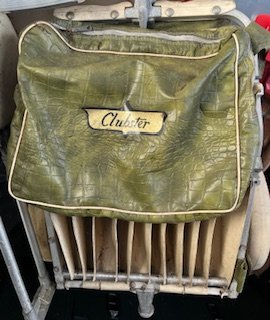
ive a vast array of player standard hickory clubs and 3 vintage bags. probably enough for 2 complete sets and some spares. not been used in some time, got fed up all the comps entered were dominated by sandbagging Swedes. dont know if i should sell them or not
 
I think that I have eight 2-woods including one that my dad bought brand new in 1969 - Slazenger Ambassador.
Most are in sets 1,2,3,4.
I have one 1,2,3,4,5 set and a set that is 1,2,4,5

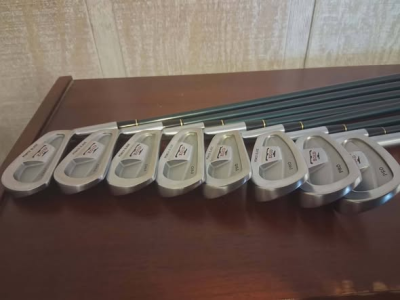
I have another interesting set...

View attachment 59701

View attachment 59702
I very much have a thing for Slazenger from this time period. Although he was not a Slazenger man, I have read in many different books that says Peter Thomson used a lofted Driver quite often in the 1960s. I think others did as well at least from time to time. Peter Alliss mentioned he used a 2 wood at the 63 Ryder Cup as a driver. In his 1963 book "My Game and Yours" - Arnold Palmer mentions in his early years on tour occasionally the ball would scuff the tee box when he hit his Driver contributing to his low ball flight and he adjusted his driver (most photos I have seen of him in this era he is using a Hogan Driver - though he was contracted with Wilson and then First Flight) - the lofted driver or 2 wood would appear to have quite a following in that era.
 
I did a very short piece on the rise of Mizuno in one of the first videos I ever made.

You sum up the failings of many British manufacturers pretty well, but there was still a lot of innovation still going on.

One of the factors against British makers was the lack of scale, they made some good designs but couldn't sell enough clubs to their limited market to make scaling up profitable so sadly they mostly remained small fish in a small pool.

You could say that they should have exported more but you have to have the capital to invest before you can export in large quantities. The likes of John Letters, Slazenger and George Nicoll, all went on export drives by sending their managers overseas to win sales but I get the impression that they didn't expect to make big deals and lasting contracts.
You make excellent points I had not really thought of. The limited market thing is especially important. Part of my studies into 1960s culture has focused on the economic issues from about 1964 onwards leading to the devaluation of the currency ("the pound in your pocket.") Also the fact that in the 1960s you could only take the equivalent of 50GBP out of the country when you went on holiday. I am sure many got around that but it must have been a factor. Interestingly, in the 1990s Slazenger became a quite high end brand here in the US for a few years. They only sold them in select green grass locations but their version of the Titleist Professional (whose name escapes me right now) was very popular here in yankee land.
 
Very interesting questions about UK golfers' perceptions of UK vs American club brands over the decades.
It is hard to gauge others' opinions from years ago, but I remember my own fairly clearly.

1960s to mid-1970s, Dunlop/Slazenger were very popular, but they were the most available clubs and reliable. The first Ping irons I saw looked odd and they were expensive in the UK. But as the 1970s came to a close I saw some very good players turning to them. They were not to make an impact on the perception on a typical club golfer until the Ping Eye2 changed everything. Retailers and pro-shops could sell any that they could get hold of.

There were Spalding factories in the UK and they were comparable with Dunlop/Slazenger for quality/reliability/price and I saw many of these in chaps bags in the 1960/70s.
By the mid 1980s onwards, Dunlop/Slazenger and Spalding were viewed as mostly the budget option for beginners.
As a teenager in the 1970s I would hang out in the club pro's shop a lot in the summer holidays, looking at all the clubs and picking up tips on club repairs and regripping.
Some of the best looking irons in the shop, to me at that time, were the Hogan and Swilken irons.
Ping Eye2 irons were expensive, yet sold more than any other. A few still viewed them as ugly and insisted on blades. Lynx offered a cheaper alternative and their irons became a very popular choice for some top county amateurs in the late 70s and early 80s. Even by 1989, I was more likely to see Ping woods in a top county player's bag than metal woods, but he might have Lynx irons or Australian Blades rather than Ping. But the change to metal woods was rapid in the early 1990s and once the Big Bertha arrived, wooden woods were a rare sight.

With the perception of Dunlop/Slazenger and Spalding moving down market, Wilson filled a massive hole in the mid-price range for golf clubs and made a huge impact in the UK market from the late 1970s right through the 1980s.

My personal perception is that in the UK, anything TaylorMade, Mizuno or Callaway is related to the modern era.
The most significant mainstream change-over from old era to modern era is the Ping Eye2 irons and the Callaway Big Bertha driver.
Roughly 1985 for my perception of the change, or possibly 85-90 as a transitional time between two eras.
Thank you so much for sharing that. I really enjoy learning from posts from people who were there at the time. From what I have read 85-90 seems a good transitional time. Do you remember the rip off clone clubs sold by a company called Rata and Rata in the mid 1990s usually out of units on industrial estates. Clubs had names like: 767s (a Tommy Armour 845 clone) MDD (A Titleist DCI clone) Big Bursar or Tour Made Bomber (Callaway and Taylor Made clone) - and various Ping clones - they seemed to be everywhere for a while but were clearly very shoddy.

I find it odd because if you look at that 1990-1995 era for not a lot more you could actually get some very respectable looking and performing mid tier gear. Wilson Ultra 45s, Titleist DTR even the Spalding Lee Trevino line c.1993 looked as if some thought had gone into them.
 
Top