Just spent a very happy 90 minutes watching that. thanks for posting.Vintage golf fans on here may enjoy this:
Palmer Vs. Jacklin on The Best 18 holes in Great Britain made in the summer of 1970. and broadcast in December and January of 1970 and 1971 on BBC-2. Lots of close up's of clubheads and so on throughout.
It is interesting to me how Jacklin was perhaps the best player in the world at the time but you can almost tell from his body language he doesn't feel he quite "belongs." There does not seem to be much in the way of optimism in his manner and speech. Yes, Palmer was fifteen years older and undoubtedly the most famous golfer of the time. But considering they both came from modest beginnings, I think it something about how post WW2 US culture that Palmer was very much exuding confidence whereas perhaps in the UK for Jacklin there was still "tall poppy syndrome." That said, I always have loved watching Jacklin and very much have enjoyed reading books he has published.
This was actually made by IMG in its pre TWI phase as a co-production with the BBC and I am almost certain (I am actually having someone find this out) one of the very last times BBC Sport made an entire sporting event on 16mm film. In the USA this was shown on CBS. It was also released in 1981 as a BBC Videogram from which this copy is sourced.
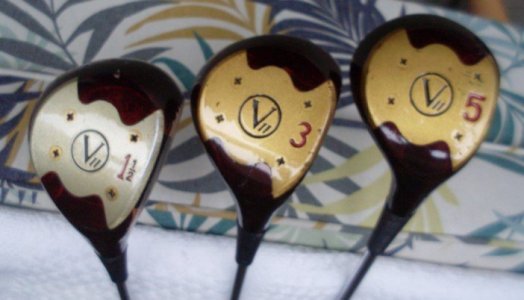
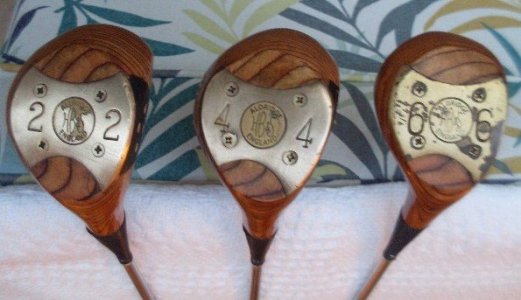
I like a 2 wood and have several, they're like a driver with a little more loft, great for when fairways aren't running.
Some people might say it's good to let the old wood get moist occasionally.I got used to using a fairway mat for the first time last winter.
I might take a 2-wood with me once mats are in use - guaranteed a good lie and keeps the moisture off the old wood.
I usually use my gap wedge for those distances.I played with a 2 wood instead of a driver from 68 to 75. It was also very good off the fairway.
Ah -= the background music over the intro commentary I think...Here is something rare: An entire 1980 broadcast (with cringeworthy ad's) from NBC of the 1980 Bay Hill Classic. 40-50mph winds and a chill in the low teens (Fahrenheit) made golf almost impossible.
Ah -= the background music over the intro commentary I think...
...David Shire's Manhattan Skyline - cracking bit of 1970s Disco orchestral music from the Saturday Night Fever soundtrack..if you are of my age you just know it so well from about 1:10' in...
Crow's recent video about Bullseye and Golden Goose Putters got me thinking.
Say in the 1970s what drew certain club players to certain brands?
If you were going to break down the demographics and lifestyles of major golf brand users in the 1970s what does it say about the golfers who chose those brands and how were there lives different?
For example, I can see from Crow's excellent videos that even having a persimmon wood back in the day (and not laminated maple) was perhaps an indicator you were invested in your golf clubs?
Were traditional Scottish companies like Sayers and Letters still a choice for decent club golfers or by this time had they perhaps come of a regional brand with many of their sales in Scotland?
Dunlop and Slazenger seemed all over the map, producing some high quality equipment but also 2nd and 3rd tier stuff? Did consumers appreciate the differences?
If you had genuine American irons, you know the premium US lines from Wilson, Macgregor or Spalding in the UK at this time was it considered a little different, if so, how?
What did British golfers in the 1970s really think about Ping irons or in the early 1980s Taylor Made's metal woods?
The rise of Mizuno in the 1980s in the UK would be a great video!Good question!
I'd say that up until the 1970s brand image wasn't much of a thing. Sure advertising influenced choices but in the UK American clubs were a rarity.
Lots of UK manufacturers produced clubs that stated "American Model" or similar but to actually find the real article was difficult.
By the 1970s overseas manufacturers had started to target the UK market and buyers were impressed by the quality and glamour of the likes of MacGregor and Wilson (although Wilson had opened a huge factory in Scotland in the 1960s.
Those that could afford them bought them and moving into the 1980s their prestige made them something golfers wanted to have in their bags. Mizuno entered the fray in a serious way in the 1980s with their Tour Proven series.
Ping were very well thought of and even though twice the price of some UK brands they sold very well.
Very interesting questions about UK golfers' perceptions of UK vs American club brands over the decades.Crow's recent video about Bullseye and Golden Goose Putters got me thinking.
Say in the 1970s what drew certain club players to certain brands?
If you were going to break down the demographics and lifestyles of major golf brand users in the 1970s what does it say about the golfers who chose those brands and how were there lives different?
For example, I can see from Crow's excellent videos that even having a persimmon wood back in the day (and not laminated maple) was perhaps an indicator you were invested in your golf clubs?
Were traditional Scottish companies like Sayers and Letters still a choice for decent club golfers or by this time had they perhaps come of a regional brand with many of their sales in Scotland?
Dunlop and Slazenger seemed all over the map, producing some high quality equipment but also 2nd and 3rd tier stuff? Did consumers appreciate the differences?
If you had genuine American irons, you know the premium US lines from Wilson, Macgregor or Spalding in the UK at this time was it considered a little different, if so, how?
What did British golfers in the 1970s really think about Ping irons or in the early 1980s Taylor Made's metal woods?