• We'd like to take this opportunity to wish you a Happy Holidays and a very Merry Christmas from all at Golf Monthly. Thank you for sharing your 2025 with us!

Plane

  • Thread starter Thread starter Deleted member 35927
  • Start date Start date
Status
Not open for further replies.
The wheels are passive , this is true of planes in general .
How does the conveyor interact with the wheels in order to slow the plane, the planes wheels only rotate because the plane is moving.

This is where the original question is getting bent a bit.
The question clearly states the conveyor matches the plane wheel speed aka they are the same. For forward motion to occur the plane wheels have to be turning faster than the conveyor…I think 🤣
 
The wheels are passive , this is true of planes in general .
How does the conveyor interact with the wheels in order to slow the plane, the planes wheels only rotate because the plane is moving.
That's why it's a paradox. Even theoretically it can't work the way you describe. Whatever the plane is doing, the movement of the conveyer belt cancels out any rotation of the wheels. Assuming the conveyor belt and wheel bearings are indestructible, the plane either topples forwards or breaks free of its landing gear.
 
No, you are getting confused again, and making up all sorts of variations. Go back to the original post.
As discussed, the OP doesn't explain every detail. The OP makes no mention that there is a pilot even in the plane. It could just be sitting on the conveyor belt doing nothing.

Clearly the discussion has evolved since then. It has become apparent that several posters actually think the engines have been engaged, but the conveyor belt will negate the forward thrust, thus the plain will remain stationary. Therefore, many comments have been based on that assumption.

Of course, if you are only going to read the OP, and then respond to a comment a poster made on page 20 (or whatever) of a thread, without reading much in between, you are clearly not going to understand the context of anything really. Puts you at an immediate disadvantage.
 
As discussed, the OP doesn't explain every detail. The OP makes no mention that there is a pilot even in the plane. It could just be sitting on the conveyor belt doing nothing.

Clearly the discussion has evolved since then. It has become apparent that several posters actually think the engines have been engaged, but the conveyor belt will negate the forward thrust, thus the plain will remain stationary. Therefore, many comments have been based on that assumption.

Of course, if you are only going to read the OP, and then respond to a comment a poster made on page 20 (or whatever) of a thread, without reading much in between, you are clearly not going to understand the context of anything really. Puts you at an immediate disadvantage.
Well now it's easier. If the engines aren't engaged the plane does not take off.
SOLVED!
 
As I said, I'm no longer arguing whether it takes off as I can't.

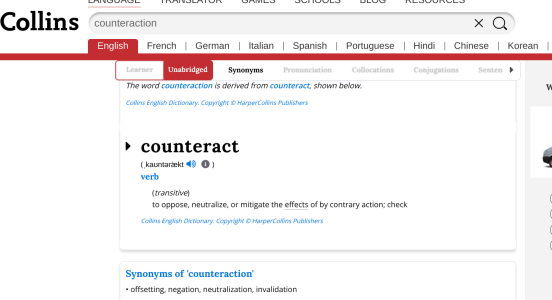
"THE BELT IS PROGRAMMED TO MATCH THE SPEED OF THE PLANE'S WHEELS IN THE OPPOSITE DIRECTION, PERFECTLY COUNTERACTING THEIR ROTATION"

Here is the definition of "counteract" as per the original question. So the belt is "offsetting", "mitigating the effects of" the forward rolling of the wheels once the engines fire up.

So without even agreeing on the meaning of what "counteracting" is, it's no wonder different answers come about. Some are saying that the belt is going in the same direction as the forward movement of the plane, but "counteracting" doesn't mean that.
Many of us interpret this as the plane's engines push the plane forward as normal but the plane doesn't actually move in relation to the air or static earth because the belt is offsetting/neutralising/negating how it would normally move forward and pick up wind resistance.


Screenshot 2025-02-04 11.15.16 AM.png
But
 
I have already done so, when explaining how that assumption can fit. Crow has also done so, so you can ask him. Perhaps you can send him a PM to discuss it fully, if you are unable to grasp the words he has already posted
You could have explained in fewer words than that.

Just simply say why you feel the belt is moving in the same direction as the plane because to most people that's not in the scenario.
 
It has become apparent that several posters actually think the engines have been engaged, but the conveyor belt will negate the forward thrust, thus the plain will remain stationary. Therefore, many comments have been based on that assumption.
It's just a discussion, so simply write here what is it about "counteracting" that is making you think differently.
 
my view is that the plane cannot move forward if the conveyor belt is going in the opposite direction of the wheels turning. What I think is that the moment the smallest amount of thrust is applied, the wheels will move, the conveyor belt will move and in no time at all (depending on the losses in the conveyor belt I beleive), the wheels and conveyor belt will be moving at infinite speed. When any puzzle starts to involve infinity it gets a bit silly.
 
Seriously? The conveyor belt that perfectly opposes the rotation of the plane's wheels (or forward motion of its skis).
It has to be powered to do that.

I think you and Swango are assuming that the conveyor belt is a passive, frictionless mechanism (like the wheels) that the plane's propulsion system just overpowers.
We are not. We are assuming the wheels are passive. We are also assuming there is a pilot in the plane, trying to take off as a pilot would normally take off. And the pilot would be successful in doing so, and a bystander would see the plane take off normally (not magically taking off from a stationary position). Or, the plane would fall off the front of the belt if it literally looked like the OP

The conveyor belt is clearly not frictionless, otherwise it would have zero impact on the wheels anyway.

Could think of it another way. Plane is flying down a normal runway and reaches 100 mph. Second half of the runway is a conveyor belt, travelling at 100mph against the planes movement. Does this slow the plane right down? No, it cant. All that would happen would be the wheels would start spinning significantly quicker, but the plane would continue to accelerate down the runway normally. The acceleration is purely through the thrust in the air, rather than thrust off the ground like a car or a jogger. If a car was flying down the runway at 100 mph then hit the conveyor belt, different story
 
We are not. We are assuming the wheels are passive. We are also assuming there is a pilot in the plane, trying to take off as a pilot would normally take off. And the pilot would be successful in doing so, and a bystander would see the plane take off normally (not magically taking off from a stationary position). Or, the plane would fall off the front of the belt if it literally looked like the OP

The conveyor belt is clearly not frictionless, otherwise it would have zero impact on the wheels anyway.

Could think of it another way. Plane is flying down a normal runway and reaches 100 mph. Second half of the runway is a conveyor belt, travelling at 100mph against the planes movement. Does this slow the plane right down? No, it cant. All that would happen would be the wheels would start spinning significantly quicker, but the plane would continue to accelerate down the runway normally. The acceleration is purely through the thrust in the air, rather than thrust off the ground like a car or a jogger. If a car was flying down the runway at 100 mph then hit the conveyor belt, different story

You’re changing the parameters of the original question, the conveyor will speed up pro rata to match the increase in speed of the planes wheels. For the plane to be moving forward the planes wheels have to be moving faster than the conveyor so effectively it can never be moving forwards.
Surely there’s a computer model that has been devised to test this?
Anyway I’ve moved on to more engineering type questions, at what point will the plane wheel bearings melt and when do the engines set on fire 🤣
 
We are also assuming there is a pilot in the plane, trying to take off as a pilot would normally take off. And the pilot would be successful in doing so, and a bystander would see the plane take off normally (not magically taking off from a stationary position). Or, the plane would fall off the front of the belt if it literally looked like the OP
"THE BELT IS PROGRAMMED TO MATCH THE SPEED OF THE PLANE'S WHEELS IN THE OPPOSITE DIRECTION, PERFECTLY COUNTERACTING THEIR ROTATION"

How does the plane move forward when the engines thrust if the belt is "perfectly counteracting" the rotation of the wheels? i.e. negating their effect?

You can't fabricate another option, the only thing in contact with the ground (conveyor belt) is the wheels which normally allow the plane to move (note, "allow", we know they don't "make" the plane move)
 
We are not. We are assuming the wheels are passive. We are also assuming there is a pilot in the plane, trying to take off as a pilot would normally take off. And the pilot would be successful in doing so, and a bystander would see the plane take off normally (not magically taking off from a stationary position). Or, the plane would fall off the front of the belt if it literally looked like the OP

The conveyor belt is clearly not frictionless, otherwise it would have zero impact on the wheels anyway.

Could think of it another way. Plane is flying down a normal runway and reaches 100 mph. Second half of the runway is a conveyor belt, travelling at 100mph against the planes movement. Does this slow the plane right down? No, it cant. All that would happen would be the wheels would start spinning significantly quicker, but the plane would continue to accelerate down the runway normally. The acceleration is purely through the thrust in the air, rather than thrust off the ground like a car or a jogger. If a car was flying down the runway at 100 mph then hit the conveyor belt, different story
The only way the plane can roll down the conveyor belt is if it's wheels are rotating faster than the belt is moving backwards. That breaks the one rule imposed by the puzzle, that their speeds are perfectly matched. Which is why that is not a solution.
 
As I said, I'm no longer arguing whether it takes off as I can't.

"THE BELT IS PROGRAMMED TO MATCH THE SPEED OF THE PLANE'S WHEELS IN THE OPPOSITE DIRECTION, PERFECTLY COUNTERACTING THEIR ROTATION"

Here is the definition of "counteract" as per the original question. So the belt is "offsetting", "mitigating the effects of" the forward rolling of the wheels once the engines fire up.

So without even agreeing on the meaning of what "counteracting" is, it's no wonder different answers come about. Some are saying that the belt is going in the same direction as the forward movement of the plane, but "counteracting" doesn't mean that.
Many of us interpret this as the plane's engines push the plane forward as normal but the plane doesn't actually move in relation to the air or static earth because the belt is offsetting/neutralising/negating how it would normally move forward and pick up wind resistance.


View attachment 56902
But
Not sure why you haven't asked Crow about this? The reason Crow's explanation fits is because:

  • As the plane moves forward, the wheels will start moving. They will have a speed. So, lets say at a point in time the plane is thrust forward to a speed of 50 mph, the wheels will want to be moving at 50mph (on a stationary runway)
  • The wheels touch the ground, and the surface of the wheel moves in the opposite direction to the planes movement
  • The treadmill has been programmed to counteract this. Not the direction of the plane, but the direction of the wheel
  • So, the treadmill (at this point in time) moves 50mph in the direction of the plane to perfectly counteract their rotation. Therefore, the wheels don't move at all, as the conveyer belt is travelling the same speed as the plane and opposite direction to the wheels, where they are in contact.
The OP does not actually say the wheels and conveyor belt are actually running at the same speed as an end result. Your patronising posting of the definition of the word counteracting actually supports this. The treadmill opposes, neutralises or mitigates the movement of the wheels, hence the speed of the wheels is actually neutralised to zero
 
The only way the plane can roll down the conveyor belt is if it's wheels are rotating faster than the belt is moving backwards. That breaks the one rule imposed by the puzzle, that their speeds are perfectly matched. Which is why that is not a solution.
So, what would happen if a plane was mid flight, travelling at 700 mph, and then the landing gear was put down and an engine used to spin the wheels 700 mph is reverse? Would the plane just drop out of the air?

I'm still confused why people thing the movement of the wheels has any impact on the forward movement of a plane?
 
Not sure why you haven't asked Crow about this? The reason Crow's explanation fits is because:

  • As the plane moves forward, the wheels will start moving. They will have a speed. So, lets say at a point in time the plane is thrust forward to a speed of 50 mph, the wheels will want to be moving at 50mph (on a stationary runway)
  • The wheels touch the ground, and the surface of the wheel moves in the opposite direction to the planes movement
  • The treadmill has been programmed to counteract this. Not the direction of the plane, but the direction of the wheel
  • So, the treadmill (at this point in time) moves 50mph in the direction of the plane to perfectly counteract their rotation. Therefore, the wheels don't move at all, as the conveyer belt is travelling the same speed as the plane and opposite direction to the wheels, where they are in contact.
The OP does not actually say the wheels and conveyor belt are actually running at the same speed as an end result. Your patronising posting of the definition of the word counteracting actually supports this. The treadmill opposes, neutralises or mitigates the movement of the wheels, hence the speed of the wheels is actually neutralised to zero
OK, so your answer is you don't understand the meaning of the word "counteracting" in the question, that's one of the main ways the puzzle gets people debating. "Counteracting" is not stopping the wheels from turning, it is cancelling out the effect of them turning, which is what treadmills do. If Crow was as vociferous as you I would question him again, I think I already did, but he isn't so I'm asking you.

I'll stress again that I'm not saying whether this plane can or can't take off, but I'm questioning your vehemence and logic saying that it definitely can. Normally when the engines apply the thrust, the wheels allow the thrust to move the plane forward, then when the plane is at speed the airflow gives the lift. But as the conveyor belt is always "counteracting" the roll/role of the wheels, how does the plane get the lift?
 
So, what would happen if a plane was mid flight, travelling at 700 mph, and then the landing gear was put down and an engine used to spin the wheels 700 mph is reverse? Would the plane just drop out of the air?

I'm still confused why people thing the movement of the wheels has any impact on the forward movement of a plane?
Lowering the landing gear at 700mph probably would cause it to drop out out of the air. But not for the silly reason you're inferring anyone thinks.

Second bit, it's confusing that you don't think the plane's only means of cancelling out the friction between runway and undercarriage don't have any impact on its forward movement.

The wheels and conveyor belt are red herrings for the puzzle. They cancel each other out. The problem essentially asks whether a conventional winged aircraft is capable of generating takeoff airspeed without ground speed.

My answer is that I don't know but suspect not.
 
OK, so your answer is you don't understand the meaning of the word "counteracting" in the question, that's one of the main ways the puzzle gets people debating. "Counteracting" is not stopping the wheels from turning, it is cancelling out the effect of them turning, which is what treadmills do. If Crow was as vociferous as you I would question him again, I think I already did, but he isn't so I'm asking you.

I'll stress again that I'm not saying whether this plane can or can't take off, but I'm questioning your vehemence and logic saying that it definitely can. Normally when the engines apply the thrust, the wheels allow the thrust to move the plane forward, then when the plane is at speed the airflow gives the lift. But as the conveyor belt is always "counteracting" the roll/role of the wheels, how does the plane get the lift?
This is where your assumptions completely break down, and probably why the OP is very clever.

The wheels on an airplane have zero effect on anything. They just react to a planes movement. But, you somehow thing that a consequence of the wheels moving is that they propel the plane forwards. So, you are thinking that the effect of the wheels turning in the forward momentum of the plane. Therefore, you assume the OP means:

"the conveyor belt is programmed to match the speed of the PLANE in the opposite direction, perfectly counteracting it's movement through air"

Clearly the OP does not say that, because it would be impossible to achieve. The spinning of the wheels on an airplane has no impact on it's speed, regardless of how quickly or what direction they go in
 
Lowering the landing gear at 700mph probably would cause it to drop out out of the air. But not for the silly reason you're inferring anyone thinks.

Second bit, it's confusing that you don't think the plane's only means of cancelling out the friction between runway and undercarriage don't have any impact on its forward movement.

The wheels and conveyor belt are red herrings for the puzzle. They cancel each other out. The problem essentially asks whether a conventional winged aircraft is capable of generating takeoff airspeed without ground speed.

My answer is that I don't know but suspect not.
This sentence is absolutely true. The wheels and belt are a red herring. They are there because the person asking the question knows many will assume the conveyor belt acts like a traditional treadmill. And, the answer to that question in the second part is yes, a conventional winged aircraft will take off (as long as it has the runway length in front of it to get to speed). Because regardless of whether it is taking off on wheels from a runway, skis from snow or a hull type design from water, the engines exert a force in the air to propel it forwards. What the wheels are doing is irrelevant.
 
This is where your assumptions completely break down, and probably why the OP is very clever.

The wheels on an airplane have zero effect on anything. They just react to a planes movement. But, you somehow thing that a consequence of the wheels moving is that they propel the plane forwards. So, you are thinking that the effect of the wheels turning in the forward momentum of the plane. Therefore, you assume the OP means:

"the conveyor belt is programmed to match the speed of the PLANE in the opposite direction, perfectly counteracting it's movement through air"

Clearly the OP does not say that, because it would be impossible to achieve. The spinning of the wheels on an airplane has no impact on it's speed, regardless of how quickly or what direction they go in
Again you've created assumptions that aren't based on what's written.
No, I have never said that the wheels actively move the plane forward. The wheels simply allow the plane to move forward as a reaction to the thrust of the engines, I think we all knew that when we reached about 8 years old.

Your thoughts on what I assume are incorrect, I do not think anything in the puzzle means "counteracts it's movement through the air", that is obviously silly, how would a conveyor belt on the ground affect a plane in the air?

The query is, how can a plane take off if the conveyor belt means it is not actually moving along the ground when the engines are providing thrust? If the plane is not moving in relation to the ground, can it take off without the normal lift from the air that comes from moving at speed?
 
Status
Not open for further replies.
Top