
IanM
Journeyman Pro
- Joined
- May 18, 2009
- Messages
- 15,164
- Location
- Monmouthshire, UK via Guildford!
Illegitimate golf balls? That's why I've heard folk shout that after a bad shot!



I love watching the women’s game , I genuinely think it’s far more relatable than the men’s, especially when you look at course length and shots they play. Also as a short ass myself I am in awe of their driver control as the longer driver shaft is and has always been a battle for me.As an aside - but related - I can't but help smile seeing some lady pros (mostly SE Asian) play a driver that is almost as long as the player is tall. Not sure how they do it, but I guess they just swing the club and hit the ball.
The distance the ball travels matters because the designed and natural challenges of many courses have been obsoleted by the distance gains afforded by equipment, primarily the ball, and the balance of skills required to achieve the lowest scores has been skewed - and the spectacle is much less interesting.
Extending courses is not always an option, but it's a largely futile exercise anyway and unsustainable in terms of land availability, maintenance costs, environmental impact, etc.
While building new tees 30+ yards further back (as has happened at many championship courses) does bring/keep some of the challenges back into play from the tee, it does nothing to preserve/restore the challenges of subsequent shots (relocating greens is rarely considered, even if it were possible).
Tricking up courses (narrow fairways, long rough, etc.), as some have advocated, can restrict scoring but is either useless or counter-productive in all other aspects.

Just to be clear, Pro golf is not about the balance of skill. It is strictly about getting the ball in the hole with fewer strokes than your opponent by any means necessary. Collecting a trophy and a check.The distance the ball travels matters because the designed and natural challenges of many courses have been obsoleted by the distance gains afforded by equipment, primarily the ball, and the balance of skills required to achieve the lowest scores has been skewed - and the spectacle is much less interesting.
Extending courses is not always an option, but it's a largely futile exercise anyway and unsustainable in terms of land availability, maintenance costs, environmental impact, etc.
While building new tees 30+ yards further back (as has happened at many championship courses) does bring/keep some of the challenges back into play from the tee, it does nothing to preserve/restore the challenges of subsequent shots (relocating greens is rarely considered, even if it were possible).
Tricking up courses (narrow fairways, long rough, etc.), as some have advocated, can restrict scoring but is either useless or counter-productive in all other aspects.



I listened to the No Putts Given podcast the other day and the guest was Jason Day. He thinks the change needed is to make the driver hard to hit again.

Heck with Titleist getting upset. I bet as usual it's the people who use the equipment. Going back to harder to hit clubs is fine with me.....but the people who demand things to be "easier" will have conniptions.I’d agree with this, optimal distance should not be reduced for centre strikes, but mishits should be punished more than they currently are. The result of this change to equipment would then lead to more conservative swings and less distance overall.
Try getting Titleist et al to buy into that though. They wouldn’t sell any clubs, so it’s not hapoening.

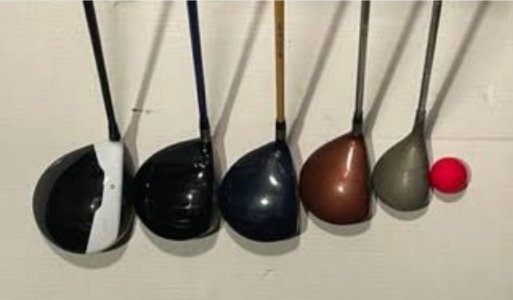
I pull out my old Ultra Firestick occasionally for hit and wonder how I used to play with it, the head is smaller then my Titleist 5 woodRoll back the driver head size. How this was allowed to happen i will never know.
View attachment 59980

There would need to be formal bifurcation of the rules in order for such a change to be effective for tour pros and acceptable for recreational amateurs.I listened to the No Putts Given podcast the other day and the guest was Jason Day. He thinks the change needed is to make the driver hard to hit again.

What are the differences between the equipment that amateurs buy and the pros get?even if they're actually just selling us something that looks the same.

The shafts mainly, I would say!What are the differences between the equipment that amateurs buy and the pros get?
This is for everyone. Day doesn’t want bifurcation.There would need to be formal bifurcation of the rules in order for such a change to be effective for tour pros and acceptable for recreational amateurs.
The biggest obstacle to bifurcation is the equipment manufacturers, who insist on being able to claim that they are selling us the same gear as played on tour, even if they're actually just selling us something that looks the same.

That the golf ball has major influence on the distance gains and forgivenes isn't up for debate - there is data to prove that modern balls outperform older generations of balls in every aspect. Your personal experience isn't very relevant, in fact: I also personally don't notice the difference from 20 years ago, but that's because if you're average, you're average - regardless of the ball.There are some really interesting points made here by Bryson, Casey and Lahiri. My personal belief, speaking from experience, is that the golf ball doesn't actually travel much further now than it did 20 years back - the clubs, in particular driver, are just easier to hit.
I find the whole notion of rollback frustrating - it's a movement by some boring men in suits being made to keep other boring men in suits happy and at the same time it will retard the game for most of it's participants.
Anyway, this is what guys who play at the highest level think.
You and they are wrong and miss the entire point, but they are paid to do so by manufacturers.There are some really interesting points made here by Bryson, Casey and Lahiri. My personal belief, speaking from experience, is that the golf ball doesn't actually travel much further now than it did 20 years back - the clubs, in particular driver, are just easier to hit.
I find the whole notion of rollback frustrating - it's a movement by some boring men in suits being made to keep other boring men in suits happy and at the same time it will retard the game for most of it's participants.
Anyway, this is what guys who play at the highest level think.
I agree with Lahiri, there are still competitions now where the winning scores are a lot lower, so it obviously comes down to course set-up. Make fairways narrower, rough more punishing at 300 yards+, more internal out of bounds areas. Then you'll see an emphasis on accuracy again, but the guys who can hit it long and straight still get rewarded.There are some really interesting points made here by Bryson, Casey and Lahiri. My personal belief, speaking from experience, is that the golf ball doesn't actually travel much further now than it did 20 years back - the clubs, in particular driver, are just easier to hit.
I find the whole notion of rollback frustrating - it's a movement by some boring men in suits being made to keep other boring men in suits happy and at the same time it will retard the game for most of it's participants.
Anyway, this is what guys who play at the highest level think.
Extending courses actually favours long hitters in scoring. The longer the course, the more critical it becomes to hit the ball further, and the more rewarding it becomes to hit it big.The distance the ball travels matters because the designed and natural challenges of many courses have been obsoleted by the distance gains afforded by equipment, primarily the ball, and the balance of skills required to achieve the lowest scores has been skewed - and the spectacle is much less interesting.
Extending courses is not always an option, but it's a largely futile exercise anyway and unsustainable in terms of land availability, maintenance costs, environmental impact, etc.
While building new tees 30+ yards further back (as has happened at many championship courses) does bring/keep some of the challenges back into play from the tee, it does nothing to preserve/restore the challenges of subsequent shots (relocating greens is rarely considered, even if it were possible).
Tricking up courses (narrow fairways, long rough, etc.), as some have advocated, can restrict scoring but is either useless or counter-productive in all other aspects.


