Do Clubs Matter?

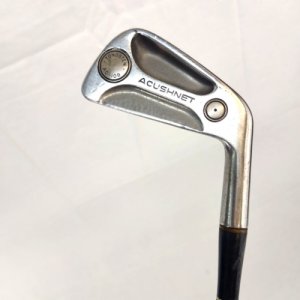
Bought a set of Acushnet irons in the mid 80’s, Titliest bought them out & badged them just after. Lovely set of irons. I remember having a lesson given by one of Yorkshire’s coach - I didn’t play for Yorkshire, he was pro at the club back then. His view was they were silky smooth and that I should never get rid of them, just reshaft & regroove them. Think I had them for around 8 years.
1757540913695.jpeg
 
I believe it was the other way round and that Titleist was a division of Acushnet from its outset.
Acushnet was a producer of rubber products and they branched into the golf market and made a golf ball that they called Titleist. Acushnet continued with two divisions, rubber and golf.

In the 1970s Acushnet was bought by American Brands later known as Fortune Brands.
In the 1990s Fortune sold off the rubber division. Acushnet remained with its subdivisions including Titleist, Footjoy and Scotty Cameron.

In 2011 Fila Korea Ltd and a Korean private equity company called Mirae Asset bought Acushnet.
By 2018 Fila bought out most of Mirae's holdings to obtain a 53% stake and control of Acushnet.

So Titleist, Footjoy and Scotty Cameron are subsidiaries of Acushnet and are Korean owned businesses.

Acushnet currently operates several facilities, many of which are in Massachusetts, as follows:
  • Ball Plant 2: Acushnet Company, 256 Samuel Barnett Boulevard, North Dartmouth, MA 02747
  • Ball Plant 3: Acushnet Company, 215 Duchaine Boulevard, New Bedford, MA 02746
  • Ball Plant C: Acushnet Company, 700 Belleville Avenue, New Bedford, MA 02746
  • Ball Plant 4: Acushnet Titleist (Thailand) Ltd. Hemaraj Eastern Seaboard Industrial Estate/Free Zone, 500/40 Moo 3 Tambon Tasit, Amphur Pluakdaeng, Rayong 21140
  • Distribution: Acushnet Company, 333 Bridge Street, Fairhaven, MA 02719
  • R&D Center: Acushnet Company, 181 Samuel Barnett Boulevard, North Dartmouth, MA 02747
 
I believe it was the other way round and that Titleist was a division of Acushnet from its outset.
Acushnet was a producer of rubber products and they branched into the golf market and made a golf ball that they called Titleist. Acushnet continued with two divisions, rubber and golf.

In the 1970s Acushnet was bought by American Brands later known as Fortune Brands.
In the 1990s Fortune sold off the rubber division. Acushnet remained with its subdivisions including Titleist, Footjoy and Scotty Cameron.

In 2011 Fila Korea Ltd and a Korean private equity company called Mirae Asset bought Acushnet.
By 2018 Fila bought out most of Mirae's holdings to obtain a 53% stake and control of Acushnet.

So Titleist, Footjoy and Scotty Cameron are subsidiaries of Acushnet and are Korean owned businesses.

Acushnet currently operates several facilities, many of which are in Massachusetts, as follows:
  • Ball Plant 2: Acushnet Company, 256 Samuel Barnett Boulevard, North Dartmouth, MA 02747
  • Ball Plant 3: Acushnet Company, 215 Duchaine Boulevard, New Bedford, MA 02746
  • Ball Plant C: Acushnet Company, 700 Belleville Avenue, New Bedford, MA 02746
  • Ball Plant 4: Acushnet Titleist (Thailand) Ltd. Hemaraj Eastern Seaboard Industrial Estate/Free Zone, 500/40 Moo 3 Tambon Tasit, Amphur Pluakdaeng, Rayong 21140
  • Distribution: Acushnet Company, 333 Bridge Street, Fairhaven, MA 02719
  • R&D Center: Acushnet Company, 181 Samuel Barnett Boulevard, North Dartmouth, MA 02747

I did wonder which way round it was. Don’t know why but Titliest just rolls off the tongue better than Acushnet.
 
The ownership of our familiar golf brands can be fascinating.

eg
Cobra is owned by Puma.
The origins and history of Puma and Adidas is very interesting.

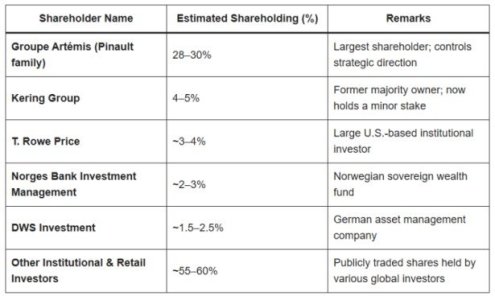
The largest single shareholder in Puma is Groupe Artemis.
Groupe Artemis is the investment vehicle of Francios Pinault and family.

So Cobra is owned by Puma which was originally a German business, but is now largely owned by a French company.
 
The best clubs for anyone are the ones that get the ball from tee to green to hole in as few shots as possible..
They may cost thousands, they may cost next to nothing.
Finding out is the fun/frustrating part...
Finding out. You are right. This summer I put together a set of Taylormade RAC oversized irons with graphite shafts. New grips as well.
What a difference.
5-Pw. About $30 each on Ebay
 
So Cobra is owned by Puma which was originally a German business, but is now largely owned by a French company.

The history of Adidas and Puma is fascinating - two brothers falling out and becoming rivals - worthy of a movie.

But Puma is only 29% owned by Artemis, nowhere near largely owned by a French company.
 
The ownership of our familiar golf brands can be fascinating.

eg
Cobra is owned by Puma.
The origins and history of Puma and Adidas is very interesting.

The largest single shareholder in Puma is Groupe Artemis.
Groupe Artemis is the investment vehicle of Francios Pinault and family.

So Cobra is owned by Puma which was originally a German business, but is now largely owned by a French company.

Think that’s prob the same for any big company now - not many owned by a company in the originating country

TM has been sold by Adidas recently as well
 
As I said, the largest single shareholder of Puma is Groupe Artemis.

Puma shareholders.jpg

Groupe Artemis is the parent holding company of Kering Group.

Francois Pinault, the co-founder of Kering and Artemis, is a French billionaire.

I feel I am correct to say that Puma is "largely" owned by Artemis.
Up to 35% ownership where no other holding amounts to 5%.
 
Last edited:
Was going to start a new thread but it seems appropriate to add this here.

Yesterday I played a round with a set of rental clubs...Tour Edge throughout, so a decent, if not mainstream brand. Irons could fairly be boxed in the "shovels" category...huge heads, wide soles and thick toplines....the very antithesis of what my normal visual club preference is (see signature). Driver, woods and hybrids all pretty normal except maybe the fairway woods having deeper faces than I would normally go for. Every club came with a graphite shaft with the exception of the SW. The putter was, for my aesthetic tastes, an abomination...a mixture of rounded mallet and a plumbers neck hosel, as well as being 2 inches too long. Love mallets, hate angular hosels...give me double bends or "flow necks" any day.

So less than confidence inspiring at first glance.

A couple of dozen shots on the range however, was more than enough to demonstrate to me that the clubs would be fine for the forthcoming round.

In fact...they were more than fine...I'm not convinced at all that I would have scored noticeably better tee to green if I'd had my own clubs in the bag. Despite the deep clunky look I was able to consistently deliver the meat of the bat to the back of the ball and generate good distance and a more powerful launch than what I might have expected.

Even the deeper faced fairway woods were easy to launch off tightish fairway lies.

I'd say the biggest issue was probably chipping around the green, whilst the wide soles deliver forgiveness, the sight of a large head behind the ball in a right lie didn't fill me with the confidence that I'd be able to hit a sharp checky sort of shot and several chips were pummelled way past the hole as I tried to be more positive than was needed.

The putter was the only area that I reckon my own flatstick could have contributed a reduction in shots...irrespective of the hosel, playing with something way too long and way to upright (even gripping down to the steel) and with a face insert, just felt all wrong. Despite me holing a couple of putts between 5 and 10ft there were plenty of others that slipped by that I'd have felt more confident over with my own putter....though I will say my distance control on the day was very good.

So...overall...a totally alien set of clubs turned out to have no negative impact on my game...indeed in certain areas (the graphite shafted irons) there could have been some benefits...they certainly seemed effortlessly easy to swing and deliver the centre of the face to the ball. "

Maybe it's time to reassess what I want out of a set of clubs and be a bit more open minded as to what I might consider buying, next time I'm looking for a new set.
 
So...overall...a totally alien set of clubs turned out to have no negative impact on my game...indeed in certain areas (the graphite shafted irons) there could have been some benefits...they certainly seemed effortlessly easy to swing and deliver the centre of the face to the ball. "

Maybe it's time to reassess what I want out of a set of clubs and be a bit more open minded as to what I might consider buying, next time I'm looking for a new set.

I think your conclusion is interesting and it isn't so much that clubs don't matter as the functionality of the clubs were more important than the aesthetics.
 
As I said, the largest single shareholder of Puma is Groupe Artemis.

View attachment 59493

Groupe Artemis is the parent holding company of Kering Group.

Francois Pinault, the co-founder of Kering and Artemis, is a French billionaire.

I feel I am correct to say that Puma is "largely" owned by Artemis.
Up to 35% ownership where no other holding amounts to 5%.

Well, to me, largely means mostly. At least 51%, more like 70%+. 30% does not give them control. In practice, Kering and Artemis each have a seat on the non-exec supervisory board. They are not management, but holding 2/7 seats on the board gives them the ability to influence management.

But I don't want to get into a semantics debate. Your overall point about the evolution of ownership of golf brands is interesting and shows the different journeys they have followed.

There is a lot of variety with different business models being effective, from family owned, to private equity to large listed group.
 
"Whatever works for you" seems to be the most popular thought on club suitability today.
Find a set that suits your swing.
To me, this was not possible when I started (late 60s)
My first ''set'' was a 5 iron and a putter and I was measured for them. My big brother was also measured for his 5 iron and putter as I say, late 60's. I still have them. I couldn't tell you what my first set was but it was only a half set. My first full set was a cut down set passed down from my dad. I still remember the thrill of owning my first SW and being able to hit it so high and catch it (wide open face).
When it became obvious that golf was not a passing phase, my dad bought me my first full set (2nd hand) 1,2,3,4 woods, 3-SW and putter. All matching set (might have been Slazenger blades) got down to 2 with them and won my first comp with them in 1975.
So I guess what I'm saying is in the old days you didn't buy what works for you, you bought what looked nice and you could afford and learned how to use them.

1970-1977
Dad ''Where's Bob?''
Mum "Is it raining?''
Dad "no"
Mum "He'll be on the golf course''

Not a care in the world, happy days.

Edit
Using the same ball is probably more important than what clubs you use.
 
I think your conclusion is interesting and it isn't so much that clubs don't matter as the functionality of the clubs were more important than the aesthetics.
Not only that, but that it is also useful to recognise your own personal prejudices when looking to buy new clubs, and be open to perhaps trying something that you wouldn't normally consider.

I reckon very few of us, if going for a fitting (or just to hit a few clubs) go in without having a preconceived idea of what we want to buy/think is right for us, in terms of the "style" (for want of a better word) of club we are looking for.
 
Well, to me, largely means mostly. At least 51%, more like 70%+. 30% does not give them control. In practice, Kering and Artemis each have a seat on the non-exec supervisory board. They are not management, but holding 2/7 seats on the board gives them the ability to influence management.

But I don't want to get into a semantics debate. Your overall point about the evolution of ownership of golf brands is interesting and shows the different journeys they have followed.

There is a lot of variety with different business models being effective, from family owned, to private equity to large listed group.
Artemis ownership of Puma is not a small proportion. I would not be able to say that Puma is owned in a small way by Artemis.

It is a large proportion compared with each proportion of all the other bodies that have some ownership.

If another body had an ownership of say 27%, then it would be wrong of me to make my statement without mentioning that other body, since its ownership would be comparable with Artemis. But no other body has as much as 5% ownership.

Therefore I say that Puma is largely owned by Artemis.
 
I have two sets of irons. My regular set or Callaway XR which I got fitted for.
I also have a set of Maxfli Revolution Midsize which I bought for a song years ago as I always liked them and wanted them.
The Maxfli short irons are lovely to use, but the longer the irons, the more you notice the difference, in both distance and accuracy.
 
Artemis ownership of Puma is not a small proportion. I would not be able to say that Puma is owned in a small way by Artemis.

It is a large proportion compared with each proportion of all the other bodies that have some ownership.

If another body had an ownership of say 27%, then it would be wrong of me to make my statement without mentioning that other body, since its ownership would be comparable with Artemis. But no other body has as much as 5% ownership.

Therefore I say that Puma is largely owned by Artemis.

I think you're reaching a bit far here :ROFLMAO:
 
I think you're reaching a bit far here :ROFLMAO:
Maybe so.
But you can win a referendum with 35% of the electorate. That is large enough.
The 65% not agreeing or abstaining are overruled.

Not the same thing, I know. It just depends on what you construe from "largely".

The referendum was perhaps not "largely" won or maybe not won at all or "not enough for overall control". But it happened anyway - largely.
 
Maybe so.
But you can win a referendum with 35% of the electorate. That is large enough.
The 65% not agreeing or abstaining are overruled.

Not the same thing, I know. It just depends on what you construe from "largely".

The referendum was perhaps not "largely" won or maybe not won at all or "not enough for overall control". But it happened anyway - largely.

Don't mention the referendum!

One of the saddest days in the last 50 years 😭
Also liable to stir up hundreds of argumentative posts on here.

I did once but I think I got away with it!
 
Top