
10 Golf Myths

Agreed: consistent distance to the hole: now imagine that's a circle target area, and your accuracy is the same (variance is equal). Now choose the circle: one that's 3ft short to 3ft long, ie 6 ft total.. Or a circle that starts at the hole and runs to 6ft past (remember, your variance doesn't change, that's simply a given for your skill level). Which circle gives you more 3ft tap in putts, and which circle gives you more putts that are 4ft or more?


View attachment 60803
I don't think of my putting dispersion shape being a circle.
In my mind's eye, I have something like this
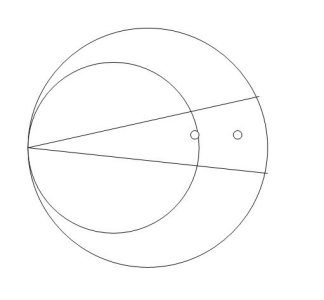
putting dispersion shape.jpg
The two straight lines are the maximum wide misses and the two curved lines are shortest hit and longest hit.
Gives an interesting shape.
The two little circles represent the place of the hole for "always up" and "equally short and long".
 
Last edited:
I didn't want to continue this, as I feel we are on repeat now, but I'm going to follow Klimski's lead with an illustration to explain my putting strategy.

Firstly, dispersion is not a circle in real life. Generally, misses left and right are pretty small. Weight is more variable, so a rectangle is a more accurate picture.

The orange box represents dispersion. The green shaded area represents holed putts. Which strategy leads to more holed putts?

View attachment 60807
The point was it leads to more three putts as well though. If you're trying to hit it 2 feet past the hole, you will hit some of them 5 and 6 feet past and miss them coming back. You will rarely ever leave a putt 5 feet short though.

And yes we are repeating ourselves but you omitted that from your analysis. 😁 You were only talking about making putts, but those who are now dismissing 'never up never in' are basically doing so on the strength of three-putt avoidance.

Ultimately we all just want to get the speed as near to spot on as possible right? 😂
 
I understand that a short putt has never gone in.
If a putt has gone long it also hasn’t gone in.
Just out of interest how far passed would you have to be to prefer to leave yourself 1 foot short?
But , which is the better putt to make, is surely the question that matters. On that basis a putt long enough to go in will go in sometimes. A putt not long enough will never go in.
And this from someone who is mostly too short than too long.
Much as I keep tellingly myself to make sure I’m long enough, my brain don’t seem to let me hit it hard enough🙄
 
But , which is the better putt to make, is surely the question that matters. On that basis a putt long enough to go in will go in sometimes. A putt not long enough will never go in.
And this from someone who is mostly too short than too long.
Much as I keep tellingly myself to make sure I’m long enough, my brain don’t seem to let me hit it hard enough🙄
A putt that has gone in has not gone long though or missed it has gone in.
If your question is would I rather I left it short or it went in I’ll take the 2 option please.
If I am left with a putt though then the majority of the time I would prefer the shorter putt.
Whether the first putt was short or long is immaterial to me.
 
I remember listening to a podcast with Mark Broadie discussing some analytics he did with Luke Donald when Donalds putting stats had deteriorated. Donald thought he was three putting more frequently . Broadie said no and had a look at the stats and what had deteriorated was his make rate of mid range putts I cant remember the precise distance quoted but I think it was around 15-25 feet and the reason they had deteriorated was that he was leaving more short and the median distance was around hole length rather than beyond. He spent a long time practising to a dummy hole making sure the ball finished beyond and he reverted back to his very good putting stats on the way to becoming world number 1.

Clearly we are not all Luke Donald but I'm pretty sure that everyone has a distance within which the aim should be for a speed at which the ball will almost certainly reach the hole and a bit further out a distance beyond which the aim should be to centre the ball at the distance to the hole.
 
Yep. You might get an idea of the general direction of break, but you won’t get an exact read. And will it be much different from the break just short of the hole?
You also need to be aware of the 'donut' too. The circle around the hole where people stand when picking the ball up. The ball will break inconsistently as it passes through..
 
Adding it into the debate, missing high vs missing low. The myth is that missing high typically is a better putt than missing low.

I’ll let you argue about which option leaves an easier 2nd putt!
My course's greens mostly have massive slopes on - I usually aim a bit higher than I think it is, because a) I've likely under-read it, but b) if you miss at least it's moving towards the hole and will end up nearer, as opposed to missing low which can take off down the slope and leave you something much longer.

This can backfire sometimes when the greens are not breaking for whatever reason (like now when they're a bit slow), and I end up leaving a sneaky 2 foot downhiller. 😂
Padraig Harrington did a good video on this. It talked about amateurs tending to under read breaks meaning they usually missed the hole low and the ball trickled further away from the hole. Miss it high by the same amount, pace etc and the ball trickles towards the hole, giving you a chance of it dropping in and if not it still leaves a shorter 2nd.

Obviously all putts aren’t the same, all players aren’t the same, but it’s always given me food for thought with certain putts. When I’ve missed on the low side and it’s trickles away badly, in my head I’m thinking ‘remember what padraig said you idiot’!
 
Padraig Harrington did a good video on this. It talked about amateurs tending to under read breaks meaning they usually missed the hole low and the ball trickled further away from the hole. Miss it high by the same amount, pace etc and the ball trickles towards the hole, giving you a chance of it dropping in and if not it still leaves a shorter 2nd.

Obviously all putts aren’t the same, all players aren’t the same, but it’s always given me food for thought with certain putts. When I’ve missed on the low side and it’s trickles away badly, in my head I’m thinking ‘remember what padraig said you idiot’!
Yeah. My only problem with doing it is; whenever I go to an away course, the greens usually don't break as much as my home track, so I end up leaving myself a few nerve-wracking two and a half feet downhillers. 😬
 
Padraig Harrington did a good video on this. It talked about amateurs tending to under read breaks meaning they usually missed the hole low and the ball trickled further away from the hole. Miss it high by the same amount, pace etc and the ball trickles towards the hole, giving you a chance of it dropping in and if not it still leaves a shorter 2nd.

Obviously all putts aren’t the same, all players aren’t the same, but it’s always given me food for thought with certain putts. When I’ve missed on the low side and it’s trickles away badly, in my head I’m thinking ‘remember what padraig said you idiot’!

I've watched this video too - and the way he explained it did make perfect sense. I think it was that the ball is typically x3 as far away for the return put if you miss on the low side rather than the same margin of miss on the high side. So if there's any uncertainty about your exact slope read (which there surely always is as none of us are completely right every time) then go higher rather than lower. Even if you like an uphill putt, a 3 ft downhiller is a lot more makeable than a 9 ft uphiller...
He's quite good at golf so I'm happy to go with that approach .
 
Of course the point my scratch handicap friend was making about me not really putting well was that if you don’t get the ball up to the hole you’ll never hole a putt.

My approaches were finishing nearly as close to the hole as his. He got four birdies I got none. I didn’t putt badly…but in his eyes I didn’t putt well. And that was his point.
 
Of course the point my scratch handicap friend was making about me not really putting well was that if you don’t get the ball up to the hole you’ll never hole a putt.

My approaches were finishing nearly as close to the hole as his. He got four birdies I got none. I didn’t putt badly…but in his eyes I didn’t putt well. And that was his point.
And your friend was spot on! If you have 18 birdie putts and leave them all short the best you can hope for is level par, at least if you ensure they reach the hole you have a chance to shoot under par. There is nothing more frustrating for good players than leaving birdie chances short :mad:
 
Of course the point my scratch handicap friend was making about me not really putting well was that if you don’t get the ball up to the hole you’ll never hole a putt.

My approaches were finishing nearly as close to the hole as his. He got four birdies I got none. I didn’t putt badly…but in his eyes I didn’t putt well. And that was his point.
If you'd have holed some of the ones you missed, then yes you'd have putted better. But if you'd have put them a foot past instead of a foot short, then they'd still have missed. It makes no difference.
 
If you'd have holed some of the ones you missed, then yes you'd have putted better. But if you'd have put them a foot past instead of a foot short, then they'd still have missed. It makes no difference.
I'm really struggling here, you are fixated with putts that miss but don't seem to grasp that some of the putts that are hit hard enough actually go in the hole.
 
If you'd have holed some of the ones you missed, then yes you'd have putted better. But if you'd have put them a foot past instead of a foot short, then they'd still have missed. It makes no difference.
If a putt is on the correct line and it is hit softly it will not go in. If it is hit with a speed that gets it past the hole it usually will.
 
Just catching up on this thread, can someone clarify for me whether it’s better to leave a putt 1 foot short or hit it 1 foot past?
You'll catch a few with that but just for clarification what a lot of people are saying is that for short to medium length putts a speed that will on average take the ball a little past the hole should they miss is optimum.
 
Top